
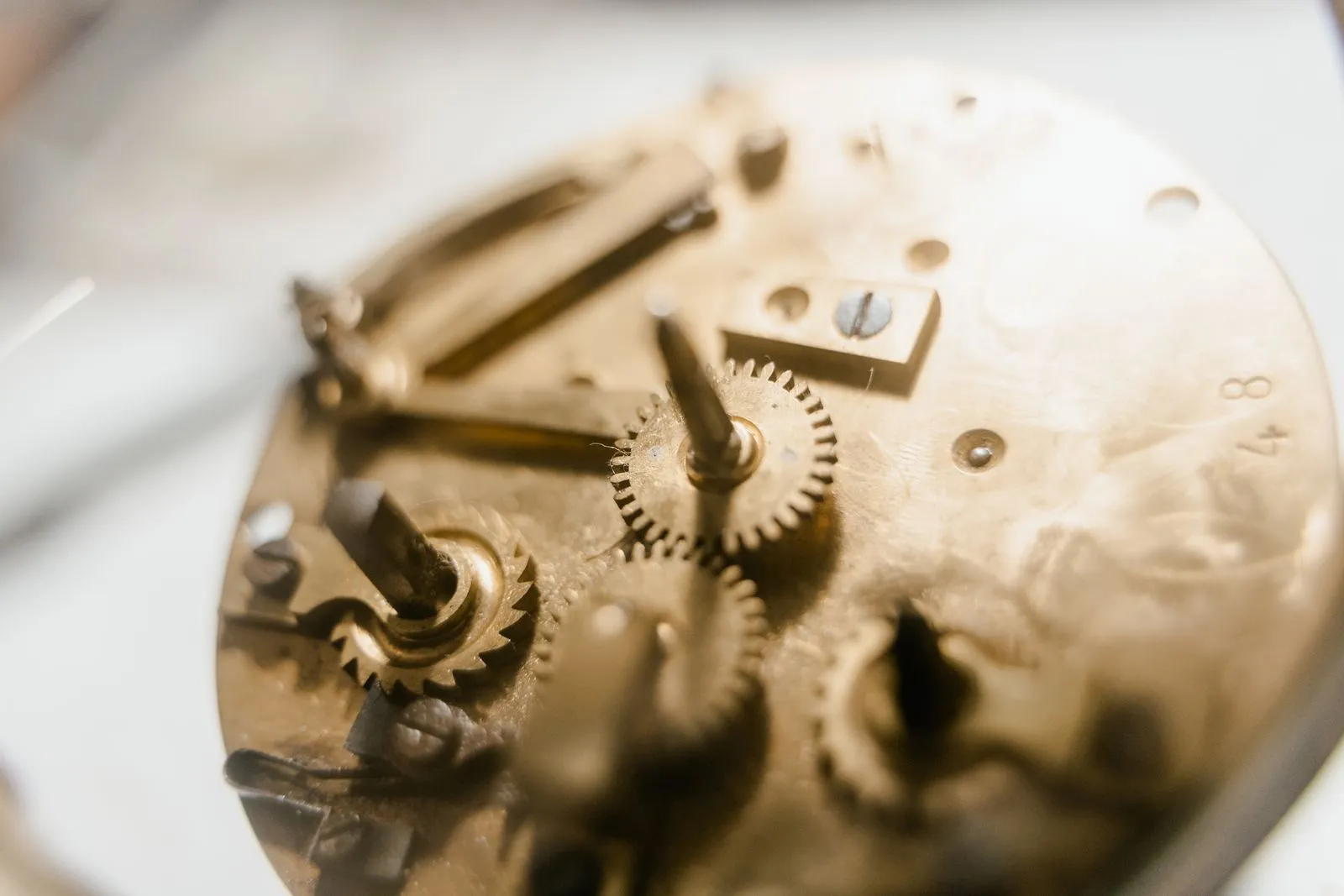
A vintage clock can stop, lose time, strike incorrectly, or make an unfamiliar sound for many reasons. Before bringing it in for repair, take a few minutes to record what you have noticed and gather any parts that have come loose. These details help the repair technician assess the clock and its history without relying on guesswork. You do not need to diagnose the problem or try to fix it yourself; careful observation is enough.
Record What the Clock Does
Describe the symptoms in plain language. Note whether the clock has stopped completely, runs but loses or gains time, stops intermittently, or behaves differently after winding. If it chimes or strikes, mention whether the sound is missing, irregular, or happening at the wrong time. Include when you first noticed the issue and whether it is constant or comes and goes.
Write down anything that seems to affect its behavior. For example, note whether the clock runs for a while after winding, stops after being moved, or makes a new ticking, scraping, or knocking sound. If you can safely do so, a short recording of an unusual sound may be useful. Avoid opening the case or moving the hands to reproduce a problem.
Share Its History
Tell the technician what you know about the clock’s age, maker, and previous ownership. A label, signature, serial number, or marking on the case can help identify it, but do not remove parts to look for one. If you have an instruction booklet, receipt, service record, or family notes, bring them along or take clear photos.
Mention any past repairs, parts replacements, impacts, water exposure, or long periods in storage. Be clear when a detail is uncertain; an approximate account is still helpful. Also explain how the clock has been kept and whether it was recently transported. This background can help the technician understand what may have changed and which checks to make first.
Gather Loose Parts Safely
Look around the clock for pieces that have already come loose, such as a key, pendulum, weights, winding crank, or decorative component. Do not force a part back into place or test whether it fits. Put small pieces in a labeled container or sealed bag, and keep them separate from anything that could scratch the clock’s finish.
If a pendulum or weights are still attached, ask the repair shop how they want you to prepare the clock before transport. Do not remove them unless you know how to do so safely. Photograph the clock as it currently sits, including any loose parts, so the technician can see their original position and condition.
Plan for Safe Transport
Before moving the clock, ask the repair shop for handling instructions, especially if it is large, delicate, or has a glass door. Keep the clock upright when possible, and use padding that prevents it from shifting without pressing on hands, glass, or ornaments. Carry loose parts separately and bring your written notes with the clock.
Avoid winding the clock, adjusting its hands, or trying a home repair just before the visit. These actions can change the symptoms or cause additional damage. If the clock is already wound, simply tell the technician. When you arrange a visit, describe the clock’s size and type so the shop can advise you on the safest way to bring it in.
Clear notes about a clock’s behavior, history, and loose parts give a repair technician a useful starting point. Keep your observations factual, gather related pieces, and avoid forcing or adjusting anything. If you are unsure how to transport the clock or a part is still attached, contact Edmonton Timeworks for guidance before bringing it in.